Connecting Generations of Orchids: How the Eric Young Orchid Foundation Is Bringing Its History to Life
Founded: Opened 9 January 1986
Location: Trinity, Jersey, Channel Islands
Size: Approximately 3,000 m² under glass, with additional surrounding grounds
Access: Open to the public, Wednesday–Saturday, 10am–4pm.
Collection: Approximately 50,000 orchids
Collection type: Orchid species, historic and contemporary hybrids, including a significant collection of Odontoglossum hybrids
3,000 square metres under glass, larger grounds surrounding
The Eric Young Orchid Foundation is the vision and enduring legacy of Eric Young, whose passion for orchids led him to establish the Foundation as a world-class institution, dedicated to sharing the beauty of orchids with everyone through innovation in hybridising, expertise in display, and excellence in education.
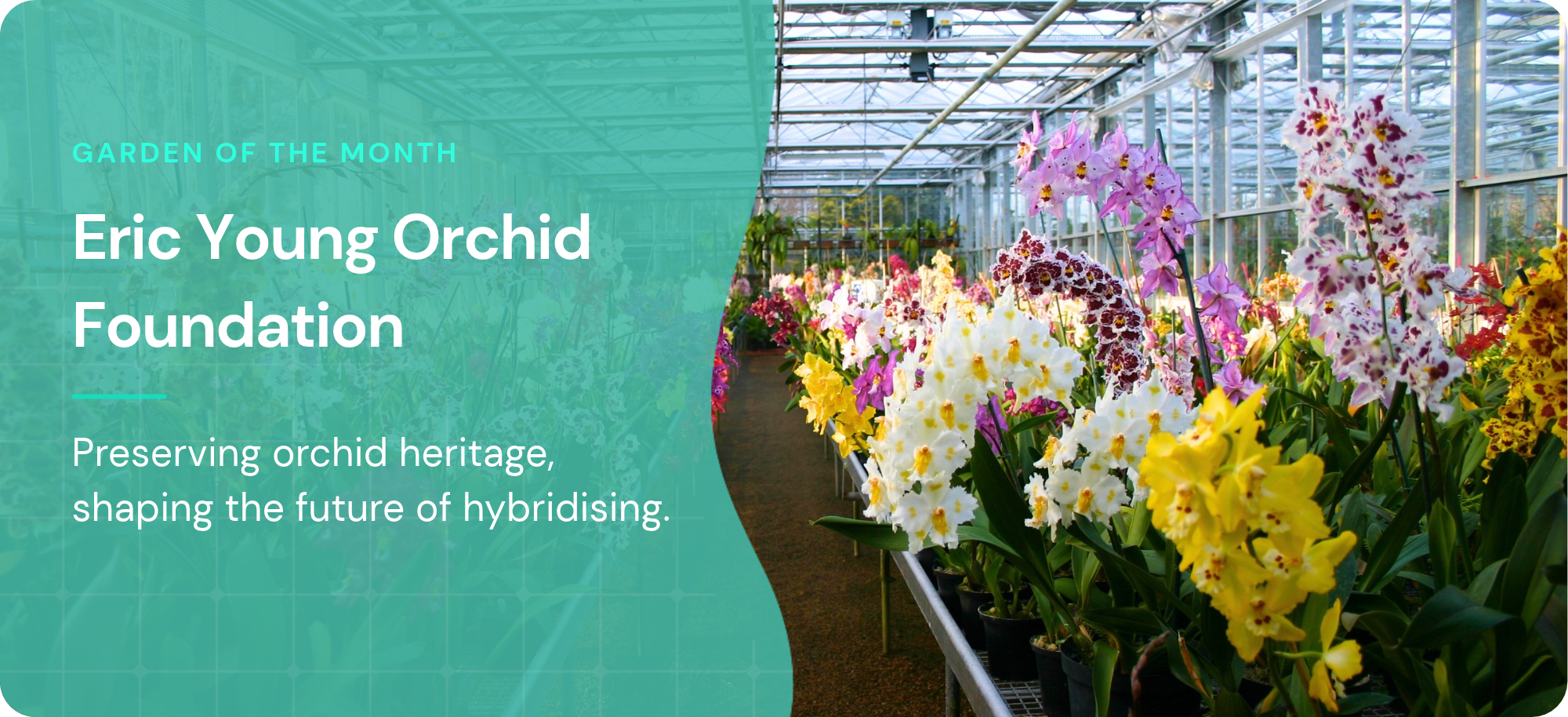
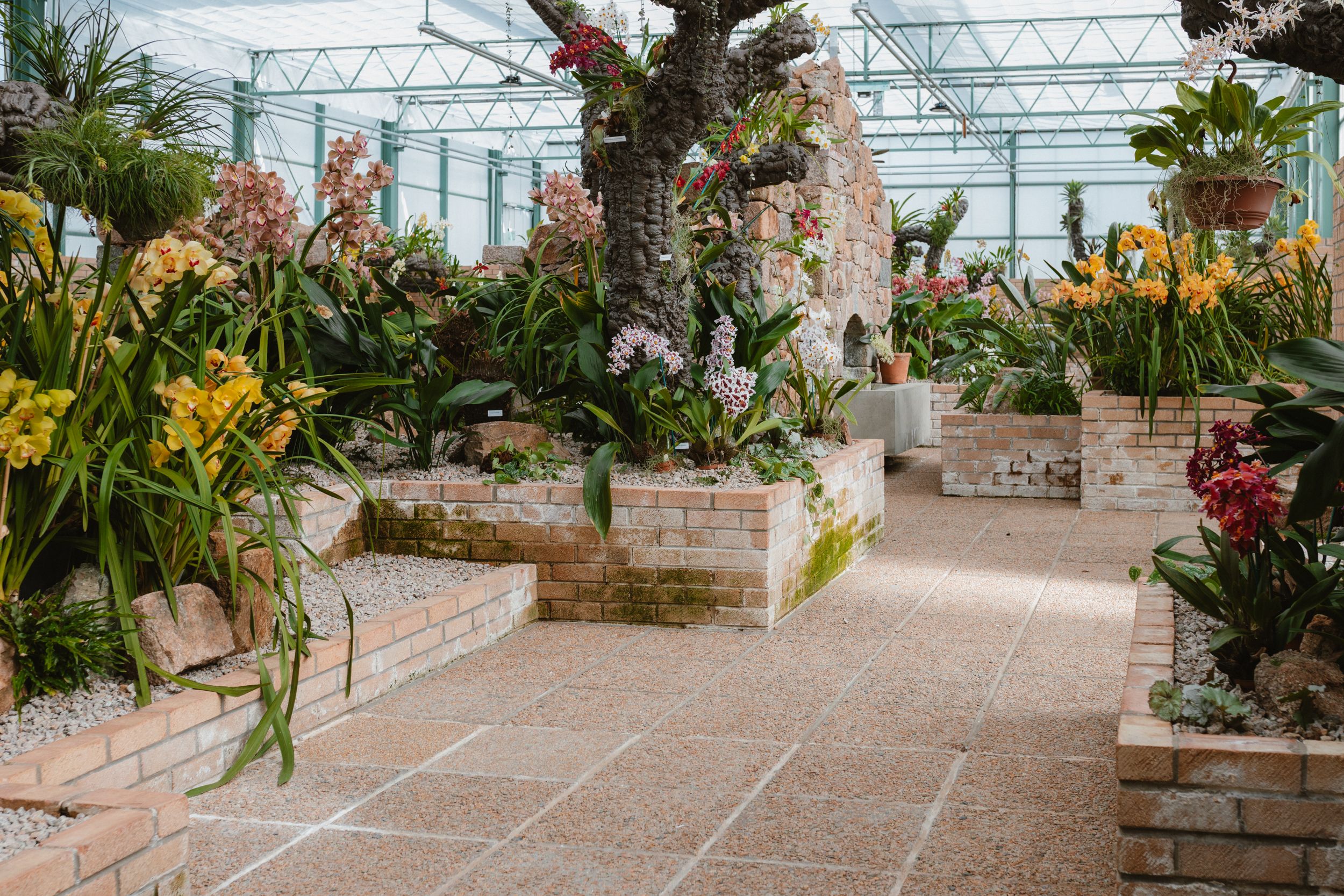
Today the Foundation encompasses eight greenhouses and a Display House and Viewing Gallery, with approximately 3000 square meters under glass. The collection contains about 50,000 orchids and employs 10 staff members. It is open to the public, and welcomes thousands of visitors every year.
The Foundation’s primary goal is to create innovative orchid hybrids, and has originated and registered over 2,200 hybrids over the last 40 years. Species, historic hybrids, and new cutting-edge hybrids are all of interest to us for our hybridisation work.
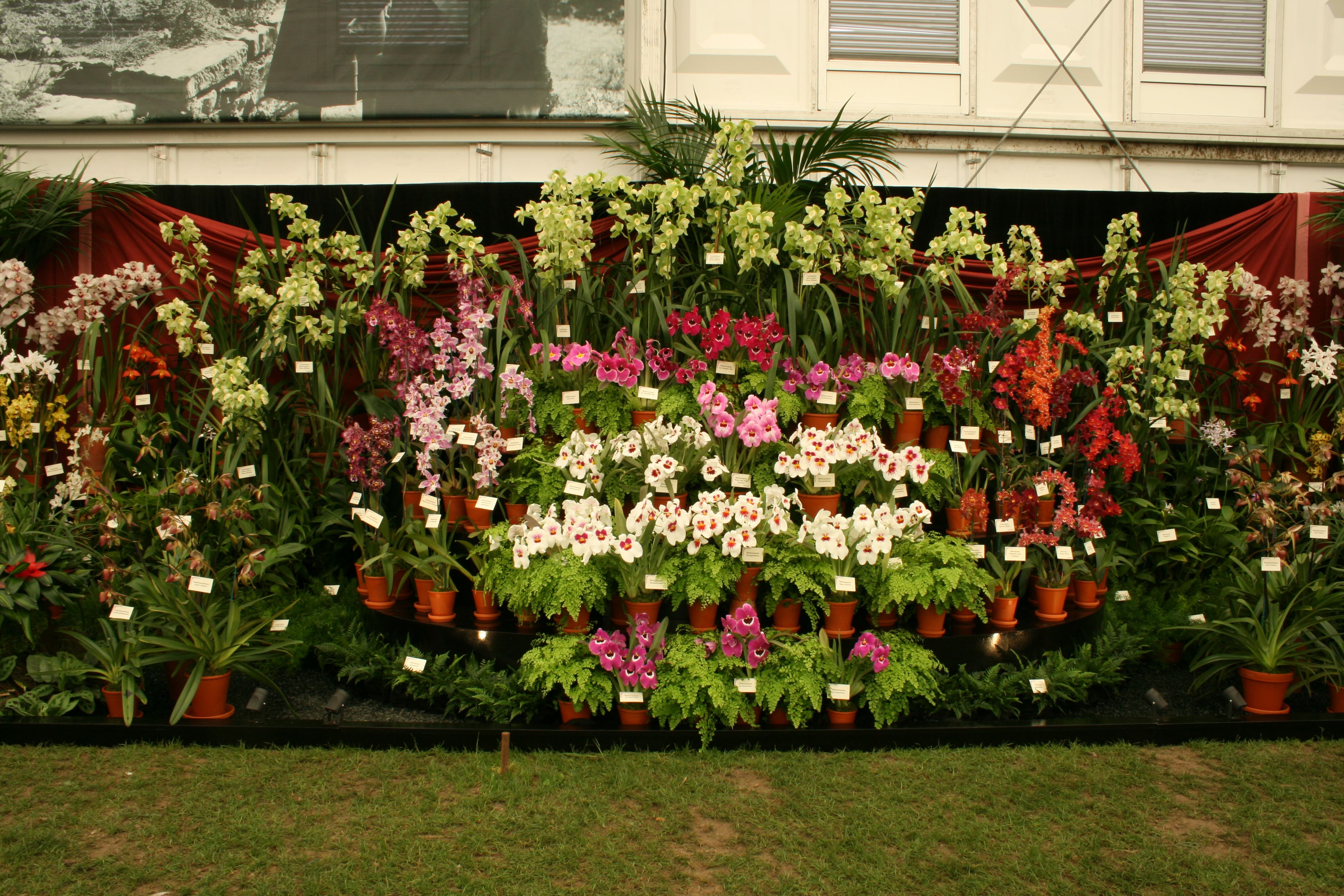
One such historic hybrid in our collection is Oncidium (syn. × Odontioda) Queen Mary (1912) FCC/RHS, which was first exhibited in 1913 at the inaugural Chelsea Flower Show, and which we displayed in 2013 at our exhibit at the Centennial Chelsea Flower Show.
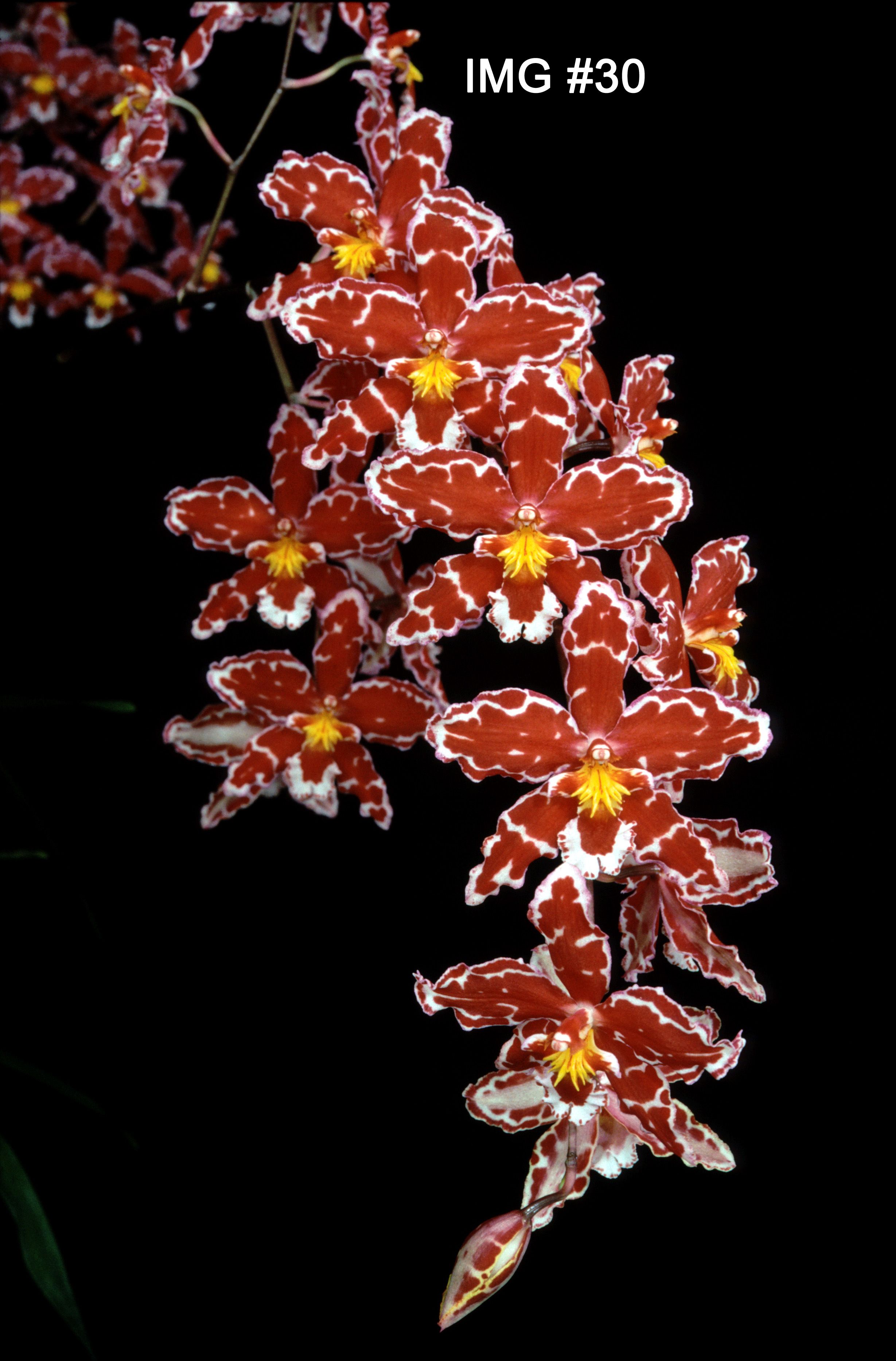
Our dedicated team have been caring for this plant for decades, carefully preserving it to protect its historical, social, and implicit value. Orchid hybrids like Onc. Queen Mary (1912) and one of its parents, Onc. Eximium (which has over 6,000 progeny!) are important stepping stones in the history of Odontoglossum hybridising, and the Foundation is home to one of the greatest collections of Odontoglossum hybrids in the world.
Bringing Decades of Orchid History to Life
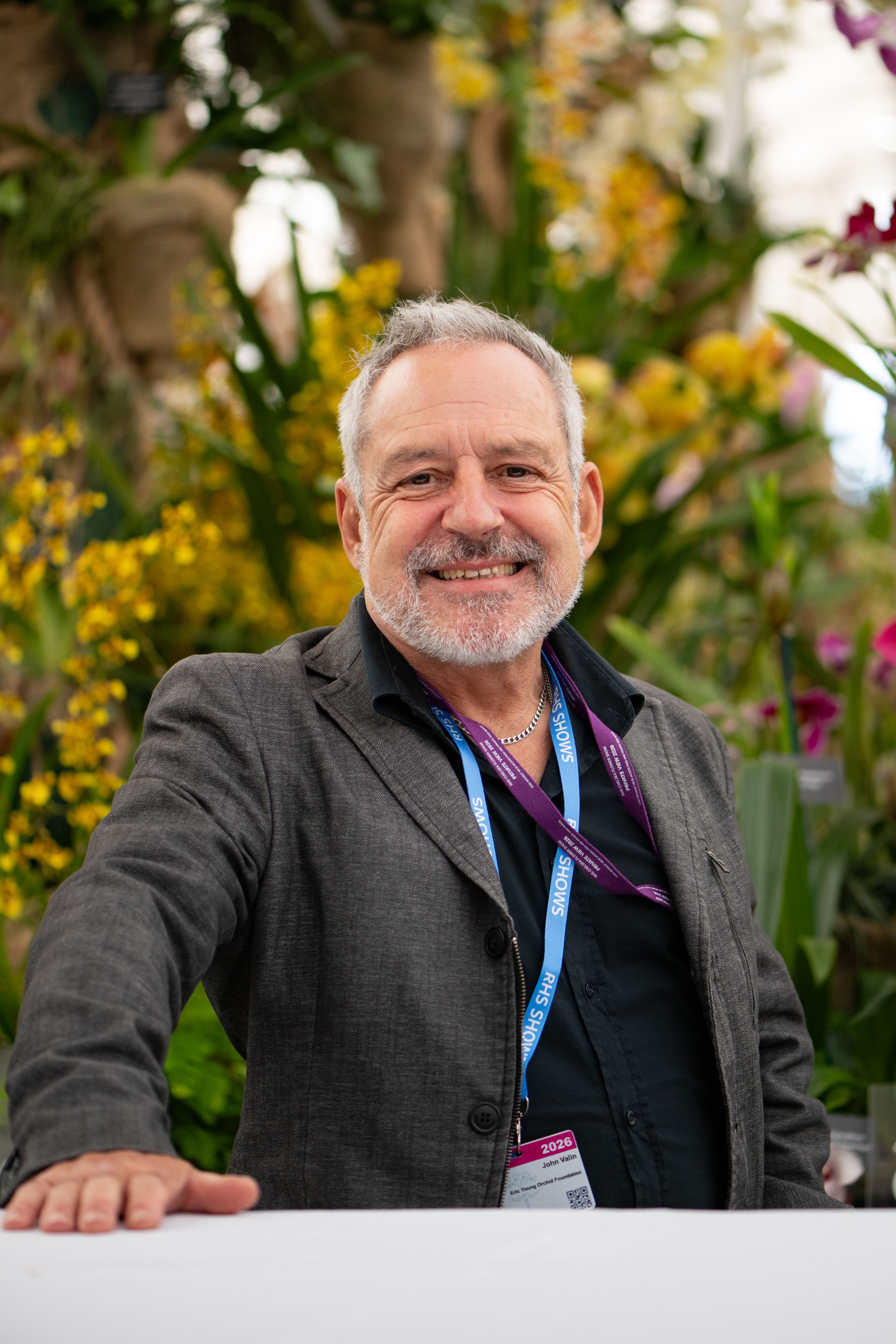
As we seek to preserve historic orchids and utilise them to create the great new orchid hybrid of tomorrow, sophisticated plant records play an increasingly important role in our work. The Foundation has a history of carefully recording its orchid hybrids, which are contained in our prized Cross Lists, compiled over the last 38 years by John Valin, who served as an Expert Orchid Grower, Hybridiser, Laboratory Manager, and EYOF Historian before retiring this past year. While John had recorded every cross the Foundation had ever made, the plants in the greenhouses had remained without comprehensive inventory – until now.
With the help of Hortis, we have undertaken the massive project of inventorying our most important orchids, which we estimate to number about 15,000. The sophisticated and living plant record system that Hortis offers us is bringing new life and insight into our work as hybridisers. As we inventory each of these important plants, we are able to integrate the Cross List data that John compiled into each plant’s record using Hortis’ rich text notes. Using the @-sign in the notes enables us to connect exact parents to their progeny records, gradually building a living record of their genetic relationships. Together with photographs of each genetic individual, easily added in the greenhouse as they flower, this is helping us visualise the influence of genetic traits in a revealing way.
By utilising this data, we are able to better predict cross outcomes, potentially saving years of time and effort, since most orchids take five to seven years to flower. But we haven’t stopped there.
The Next Chapter in Orchid Hybridising
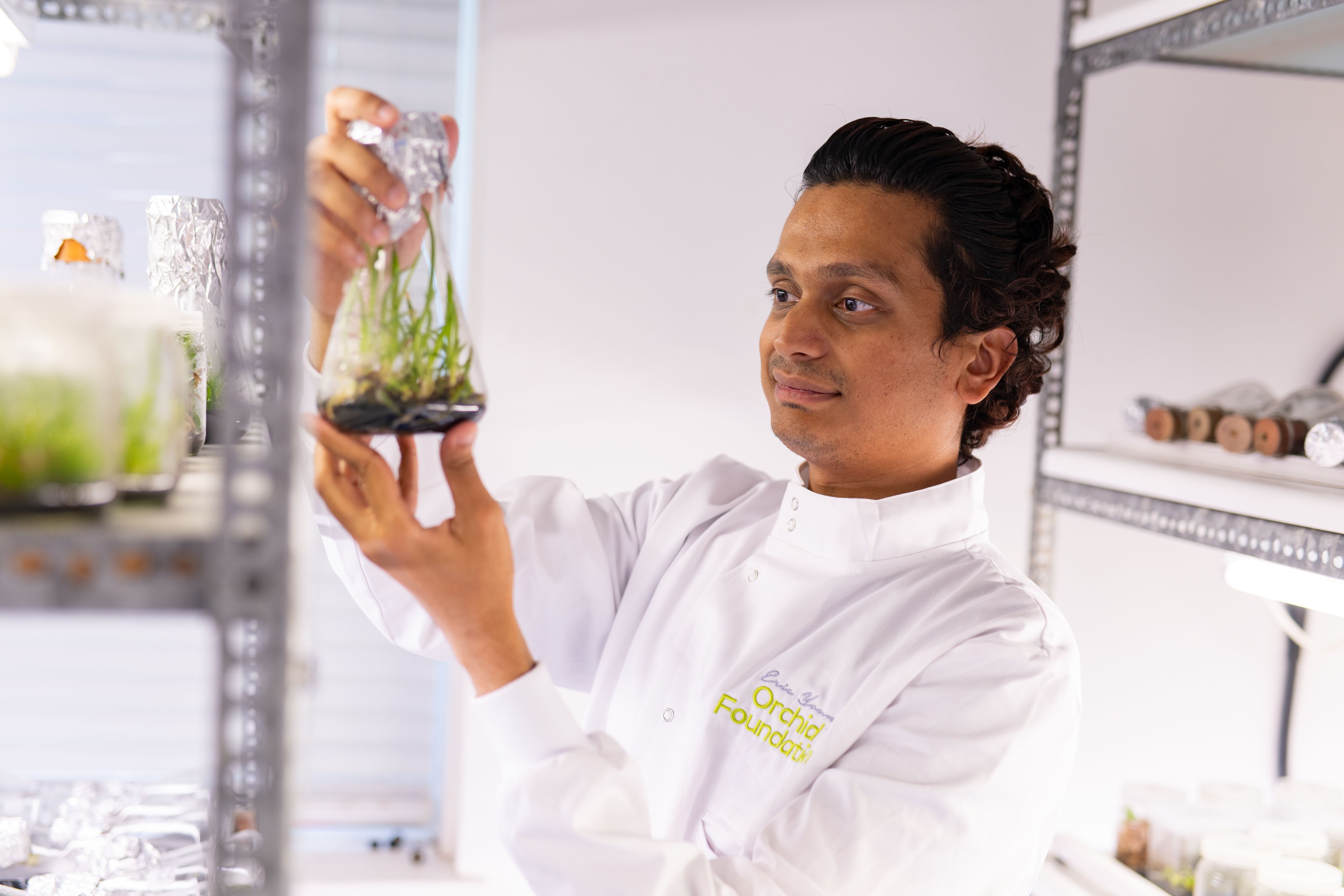
When John retired, he passed his leadership in our laboratory over to our new Laboratory Manager, Dr. Amar Hundare. Building off of John’s work, Dr. Hundare is creating a complex toolbox of new laboratory techniques and resources that are accelerating our work as well. Using plant growth regulators, modern mutagens, and cutting edge analysis, Dr. Hundare is driving our laboratory to the forefront of the modern world.
With Hortis assisting our hybridisers in connecting the dots between parent plants and offspring and the genetic influences that create them and Dr. Hundare accelerating the pace at which we can produce hybrids, the Foundation stands poised to step into a new age of hybridising innovation. A comprehensive inventory is on the horizon as well, helping to track and organise thousands of historic, rare, and significant plants, which serve as the basis for our hybridising work. Hortis’ built-in Public Sites feature stands to enrich our relationships with our global guests, other growers, hybridisers, and researchers, as we work towards making our collection publicly accessible, opening doors for collaboration and material sharing that will benefit the entire orchid community.
There is a lot of work to do, but we are ready and excited to step into a new age of progress, sharing the joy and beauty of orchids with everyone, growing and thriving together, shaping the orchid world for future generations.
Learn more about the Eric Young Orchid Foundation, plan a visit, or follow their latest news and work through the links below.