Sub-locations
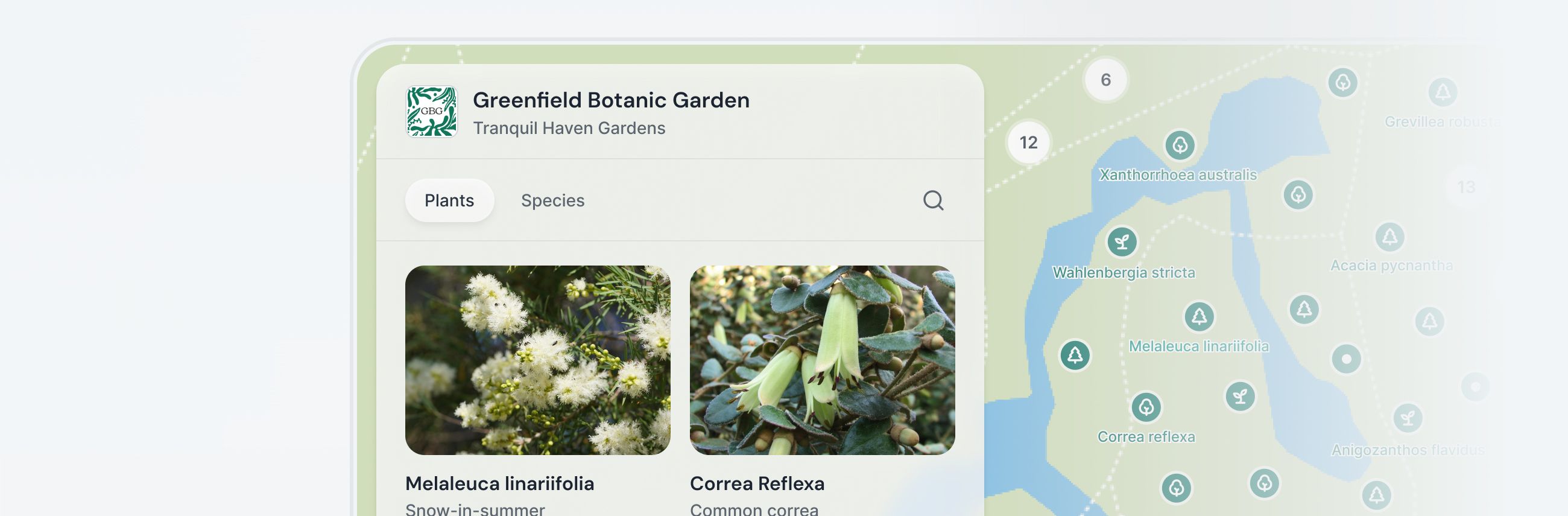
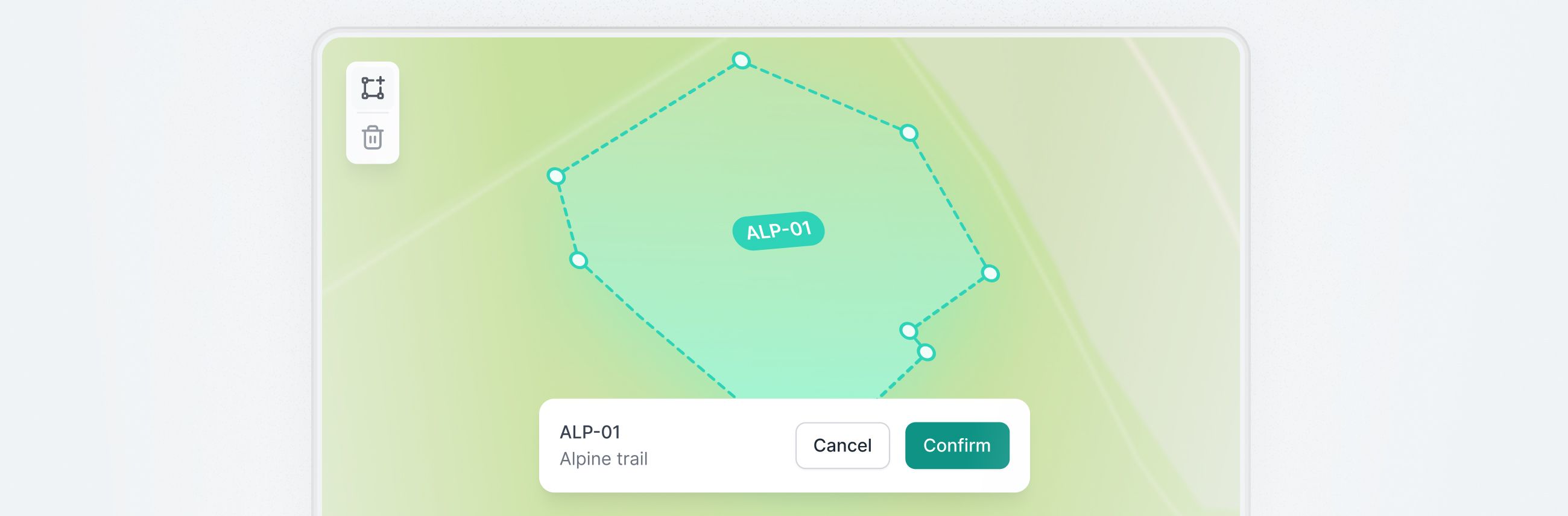
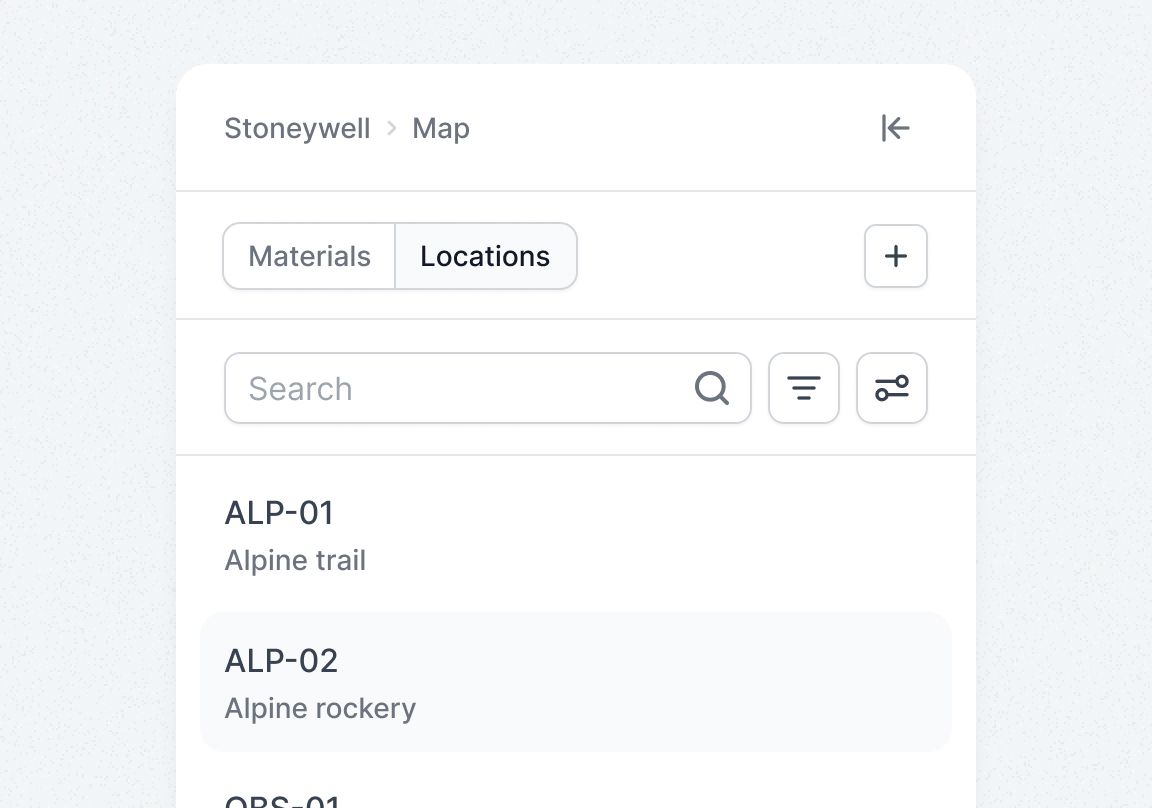
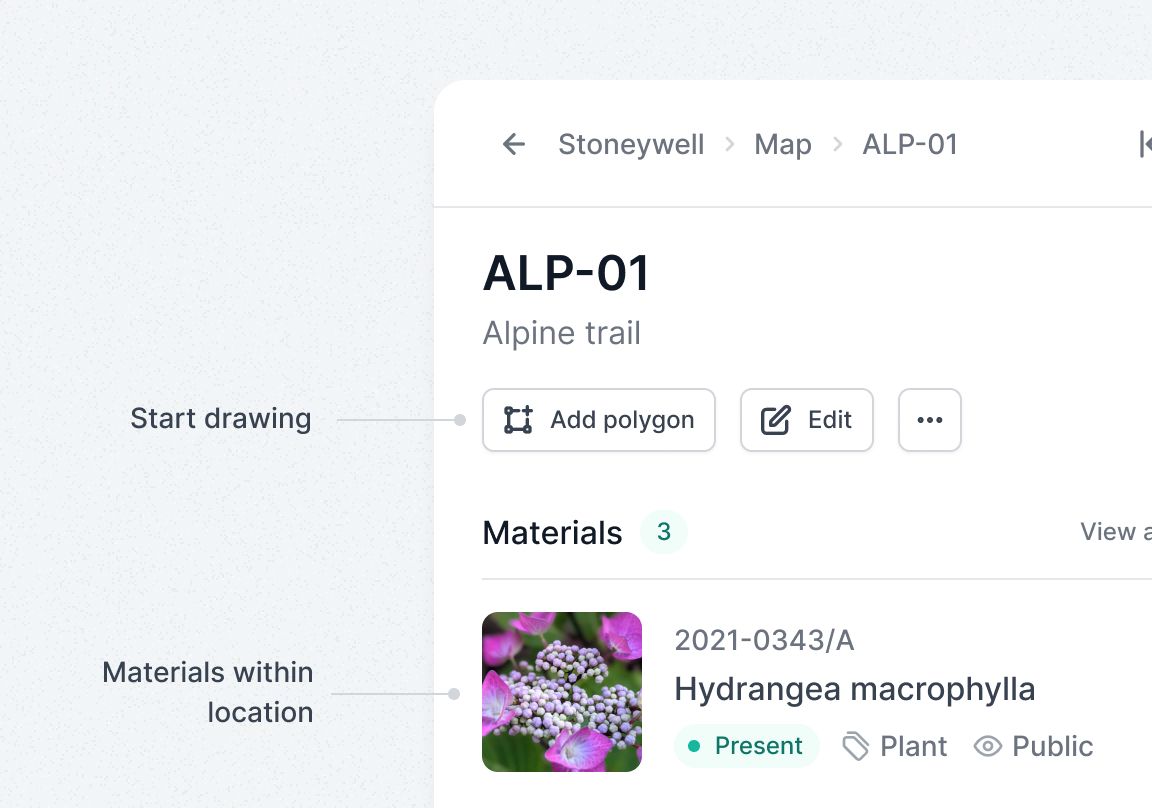
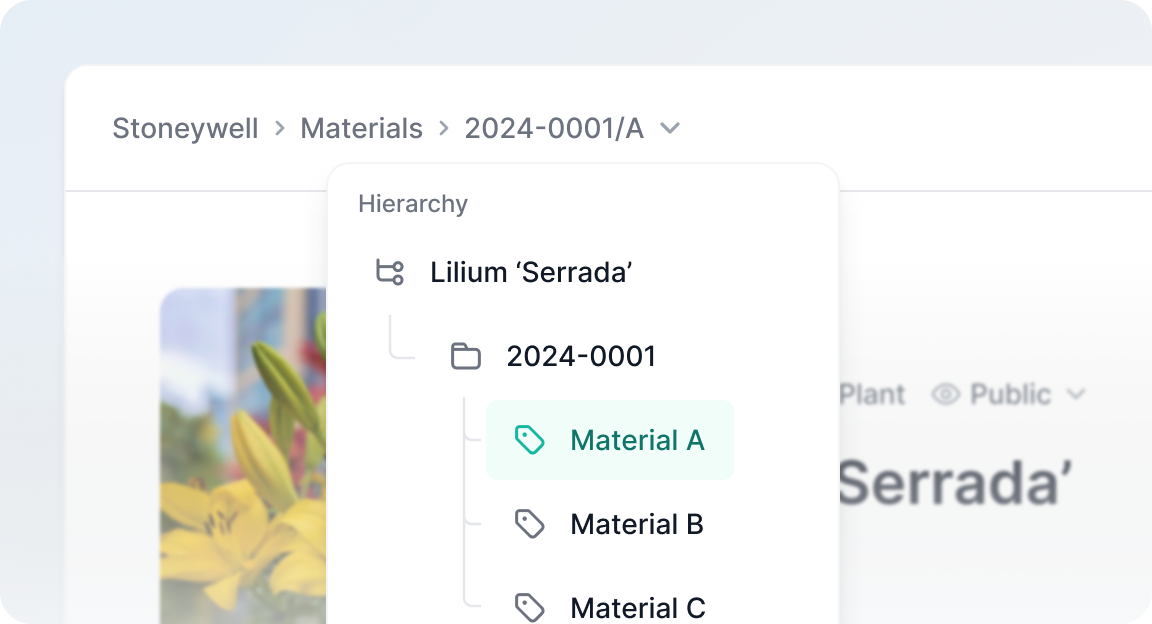
You can now add sub-locations to your site's locations to better represent the organizational structure of your garden. Sub-locations provide flexible grouping and let you filter and view materials associated with parent locations. Sub-locations are available on the Plus and Custom plans.
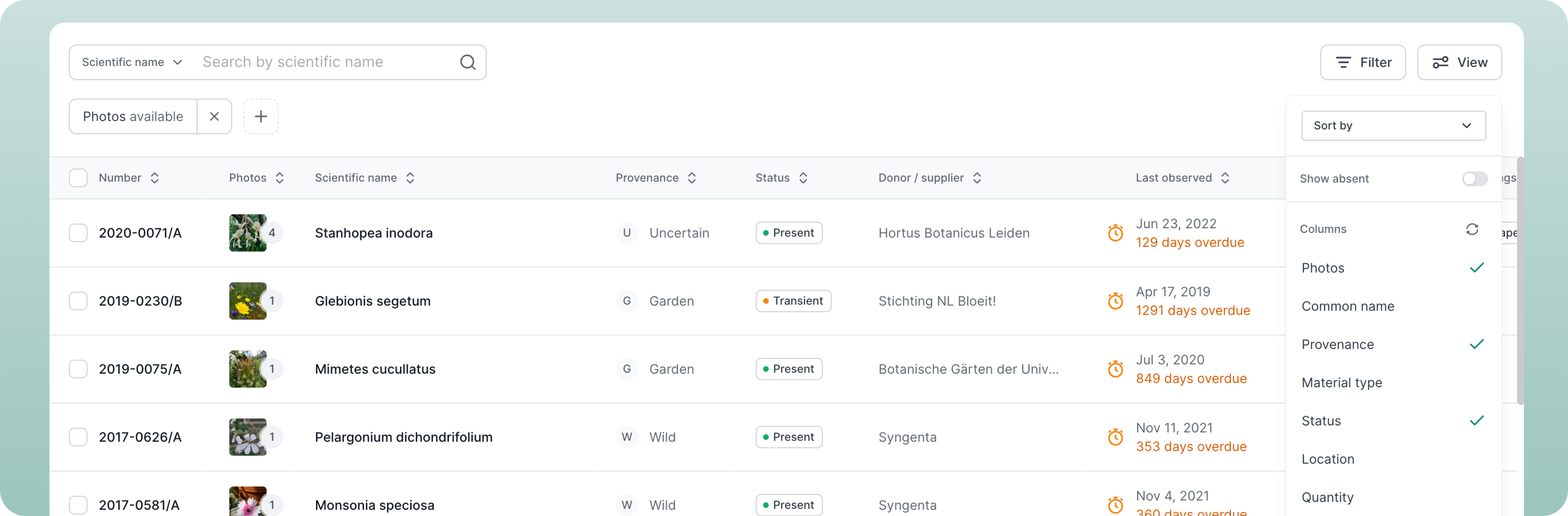
A newly designed list page accompanies the sub-locations and provides filtering, searching, as well as displaying the hierarchy. Individual pages for each location are also available, allowing you to dive deeper into the full list of associated materials, sub-locations and activities.
New material types
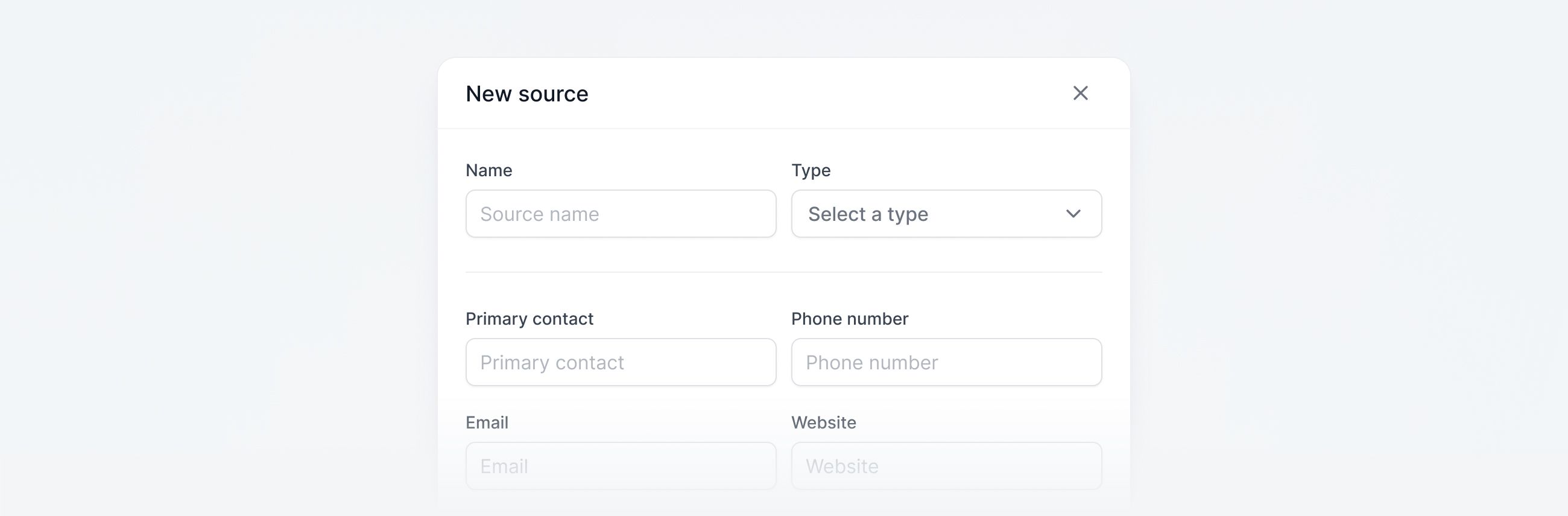
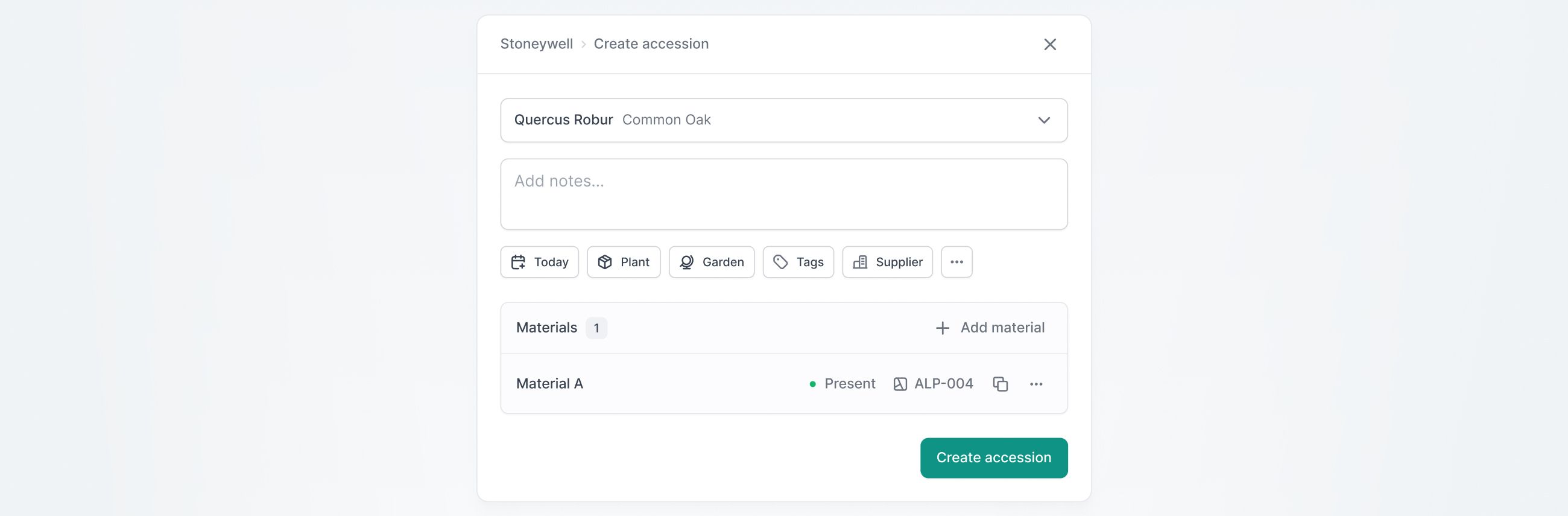
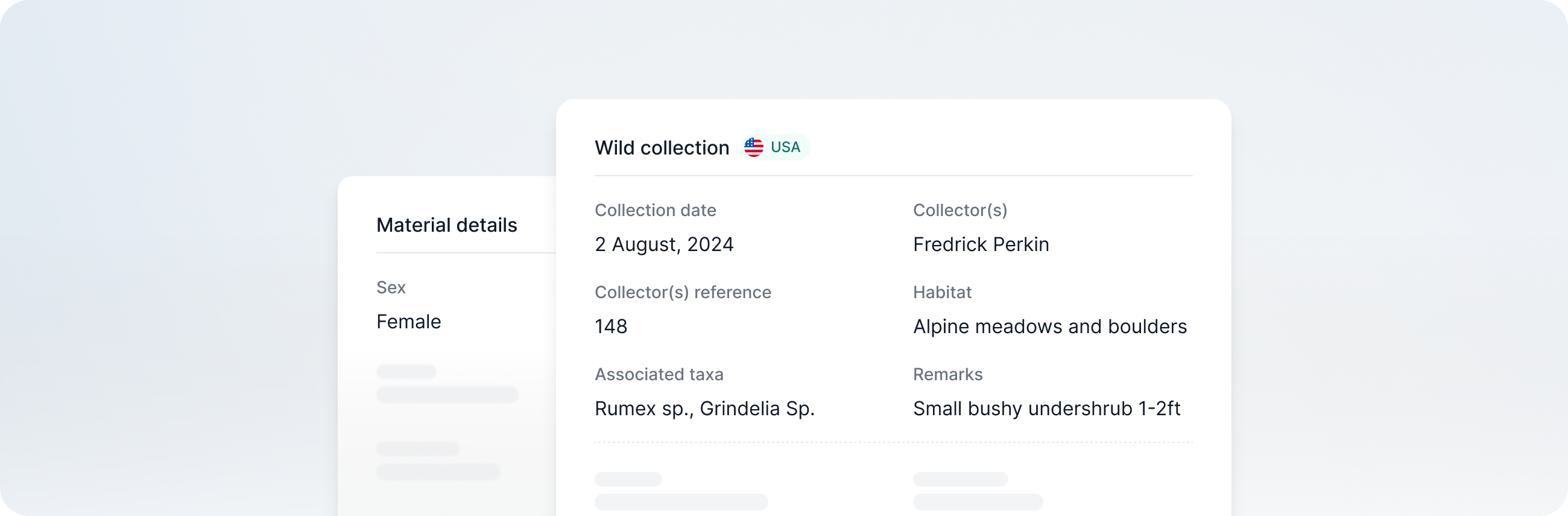
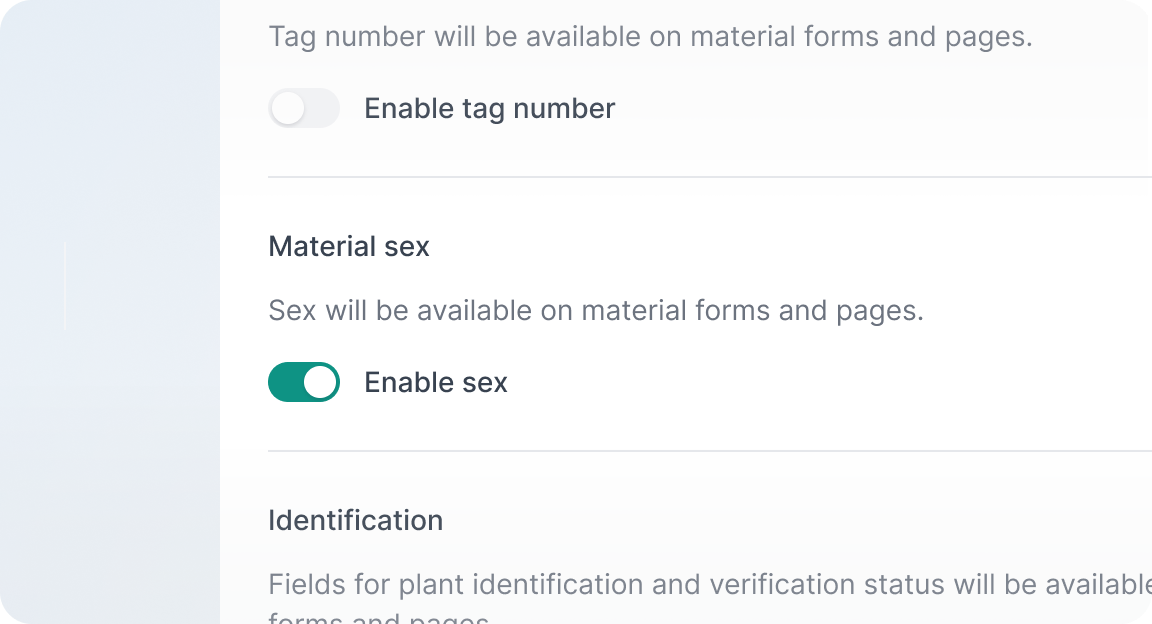
The range of available material types has been expanded beyond plant and seed to now include: explant, pollen, spore, voucher, and DNA. Explant is a broad term that covers parts of plants, such as tissue culture or cryopreserved material. When recording anherbarium voucher, an additional type status field lets you classify type specimens more precisely.
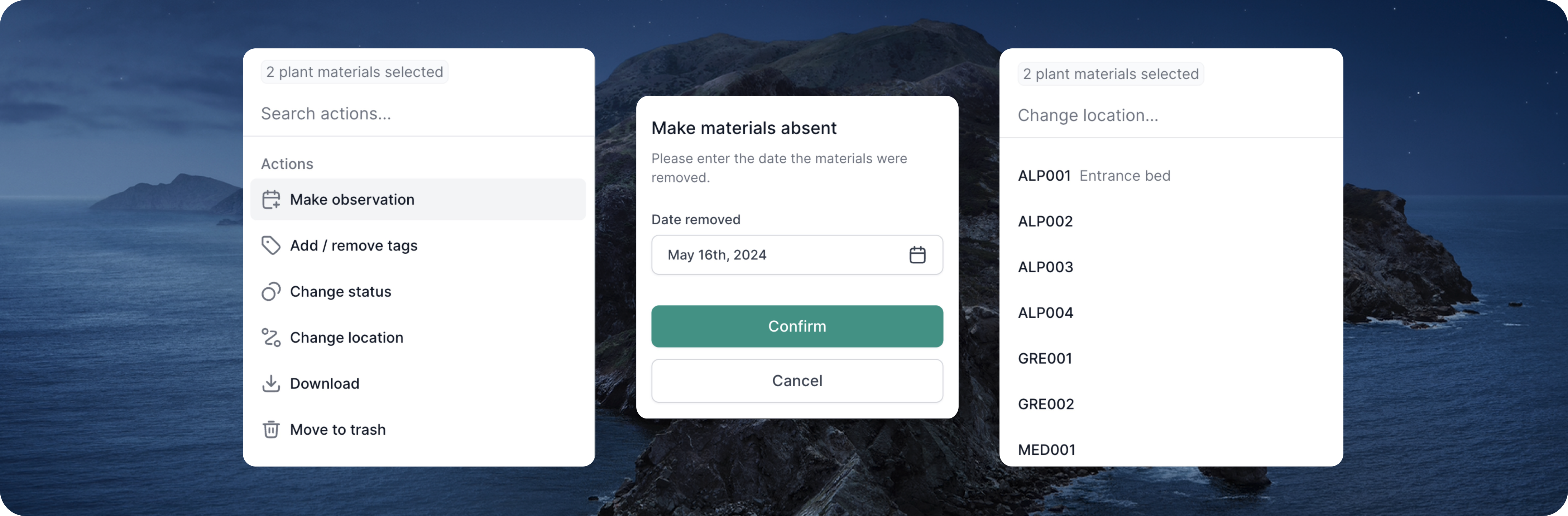
You can also designate expected material types for a location. Once configured, this narrows location results when creating a material of a matching type, streamlining the recording process.
Simplified record pages
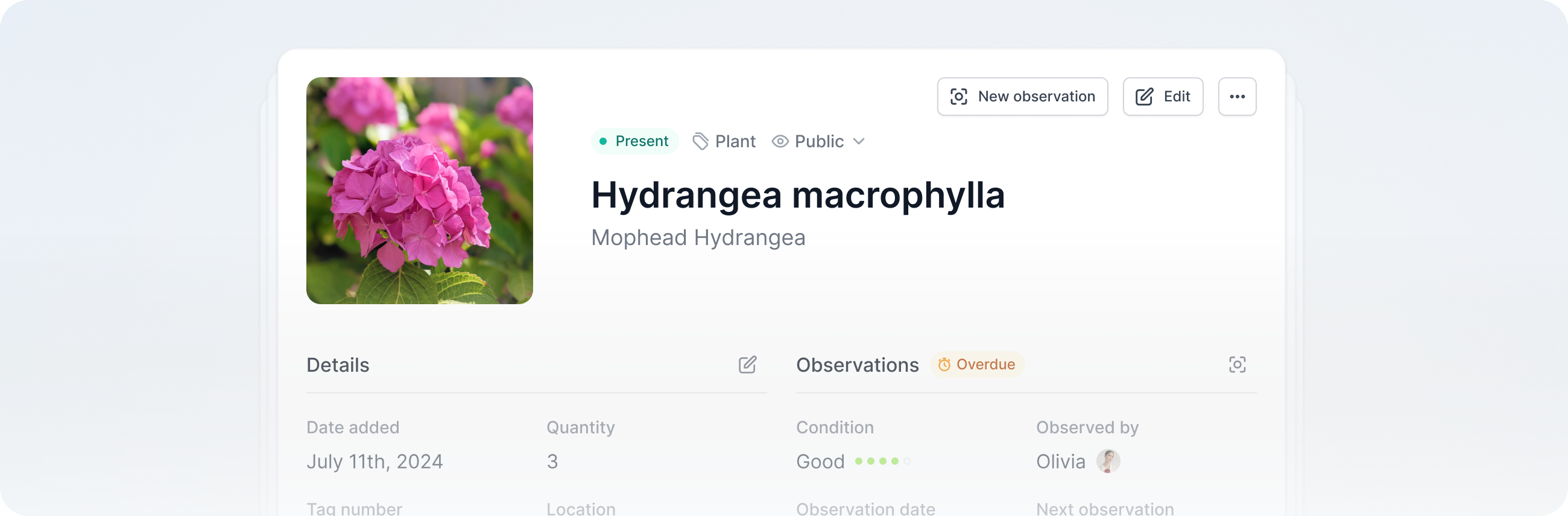
The record pages have been through multiple iterations over the years, with a consistent goal of making growing data easier to read and act on.
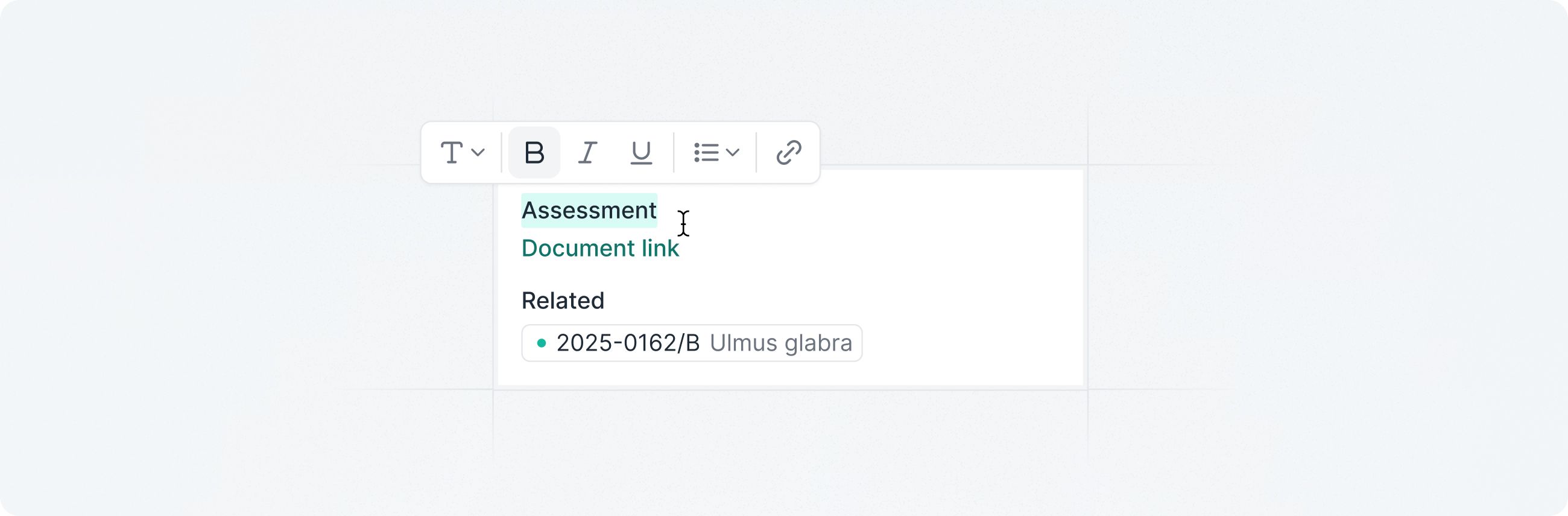
In this latest update, visual clutter has been reduced while giving more space to key properties and sections. Editing is also significantly faster — you can now make changes directly on the page by clicking any property, rather than navigating through a separate edit form.
Logs
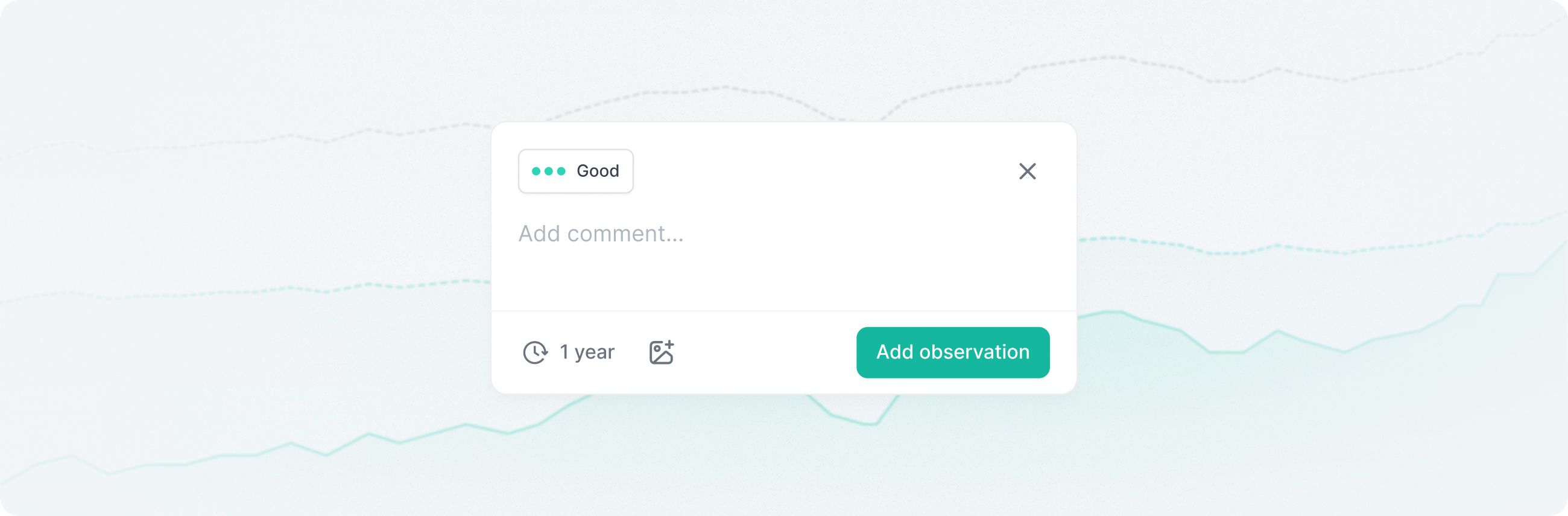
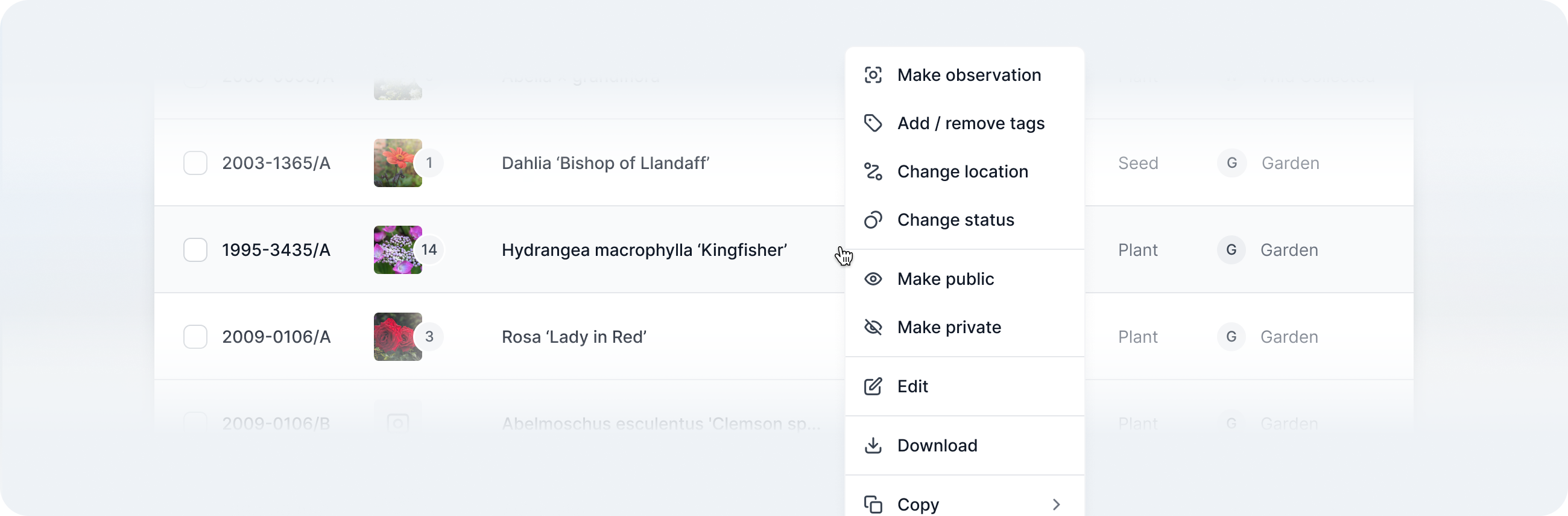
Observations in Hortis have provided an essential way to track plant conditions over time, but they weren't well-suited for recording general events associated with a material. To address a broader range of use cases, observations have been replaced with Logs, a more flexible way to track material events.
The log form lives within the material activity section, making it easy to add comments without needing to assess conditions or directly observe the plant. Logs can also be back-dated to capture events that occurred in the past. In future updates, we plan to expand the log system to support recording measurements, treatments, and surveys.